
 Gloves
 Jerseys
 Gear
Gear
 Brands
Making a diving save is one of the great joys of goalkeeping. Extending your body and flying through the air to make a finger tip save is wonderful. It is importnat that we train our body and mind to use the correct soccer goalie diving techjnique. It protects our body from injury and helps us make more saves in the goal. Here we have plenty of articles and videos on the best diving, extension and reaction saves!
Diving, Extensions & Reaction Saves
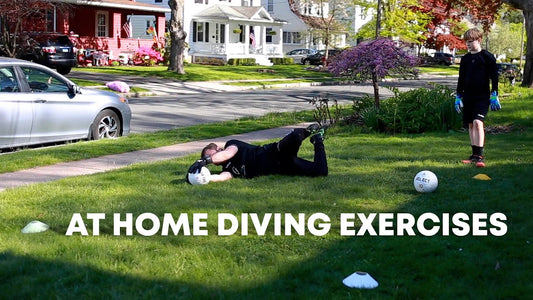
At Home Youth Diving for Goalkeepers
This is the second at home training session recorded with a youth goalkeeper. Last time we focused on basic warm up and handling drills. In this session the focus is on introducing diving to the youth keeper, making sure they control their body and the ball. You can follow along with these soccer goalie exercises with minimal equipment and a training partner. Parents, this is a great way to keep your goalkeeper engaged during the lock down.
After a good warm up, we move onto diving technique, breaking the art down into easily understood sections. With youth goalkeepers, it is important that they learn the diving technique is small steps, so that they control their body and the ball. We do not want a young soccer player slamming their body into the ground over and over as it will lead to injury. By breaking the technique down, it gives the goalkeeper time to absorb the information and produce a quality save. This will take time and lots of repetition as you can see in the video.We like to start with the goalkeeper on their knees with a stationary ball, learning how to step in the direction of the shot and slowly lower their body to the ball in a controlled manner. This reduces the chances of injury and ensures the goalie learns the correct technique. Once comfortable you can progress to a soccer ball service with either the feet or hands. Now the keeper is developing timing of the shot and learning when to lower their body. We encourage the keeper to think about moving their body east to west rather than falling in a north to south manner. Progress to serves off the ground (hip) height to develop further timing and a controlled landing. The second phase of the session moves the goalkeeper to their feet and continuing with the same technique. We work on the keeper taking a large step in the direction of the stationary ball and bending their knee to lower the body toward the ball. Again, once comfortbale the ball can then be served to the working goalkeeper either with the feet or hands. The final progression would be to increase the speed and height of the service to further challenge the goalkeeper.
Finally you can play "goalkeeper wars" with the working goalie to keep them focused and increase competition. Most goalies love to play this game and it is fun at any age.
This session was conducted by Christian Benjamin of www.keeperstop.com. Contact the goalkeeper experts at Keeperstop on 860.904.7679
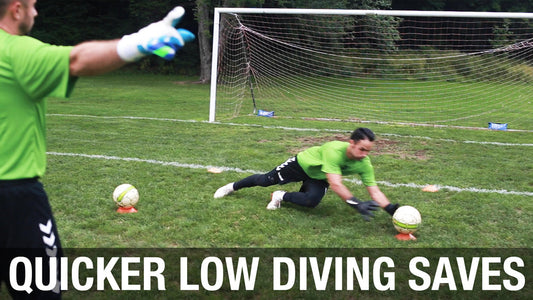
Goalkeeper Diving Drills For Close Shots
Goalkeeper Low Diving Progression with Wider Ready Position and Inside Step
Shots on goalkeepers are coming in closer and harder with less time to react. This goalkeeper training progression helps a developing youth goalkeeper to dive and react quicker with a wider ready position, proper balance, and inside step to load and explode quicker.
Diving Warm Up: Stationary balls positioned close enough to reach and save through the ball with one step. 3 – 4 reps each side. Goal is to warm up the goalkeeper.
Ready - Help them develop the timing of ready position, proper distance of feet in the starting position for maximum quickness and power. Hands - Focus on establishing hand a coordination with hands slightly out front wider than body width.Go - When the goalkeeper has to make the save the goalkeeper will step inside their set position. Drive head and hands through the shot and save.
Off Angle to Wider Ready Position, Second Progression: The goalkeeper can visualize they are ready for a ball in the wide channel outside the 18 yard box. The ball is crossed or driven to a target 10 yards off the goal line.
Ball line and Angle - The goalkeeper will change the angle by dropping back on or close to the goal line.
Ready and Balanced - Wider ready position to utilize hands and feet. Hand position off the body wider than shoulder width. Not straight but bent to drive and push arm and hands to the save.
Inside Step - Short inside step to prepare body weight and muscles in the direction to push and drive with maximum power in the shortest amount of time.
The inside step established a better angle to react and push from. Bigger steps outside shoulder width can be problematic for quicker reaction saves since they are bigger movements and take more time. Footwork or outside steps are great for shots from distance. The inside step for low diving is another technique to master to load and react quicker with the most power possible for closer shots such as cutbacks or headers. Watch the pros dive during closer range shots. Many employ the inside step.
Watch the video below and play with it to see what you think. There is no right or wrong way to make a save…. As long as you make it. Contact keeperstop.com with any goalkeeper equipment or education questions.
Thank you to Elite Sport USA for supplying the Elite goalkeeper gloves and equipment for the training session. Great game performance at on sale prices we can all afford.
Soccer Goalkeeper Training. Drills on How to Dive
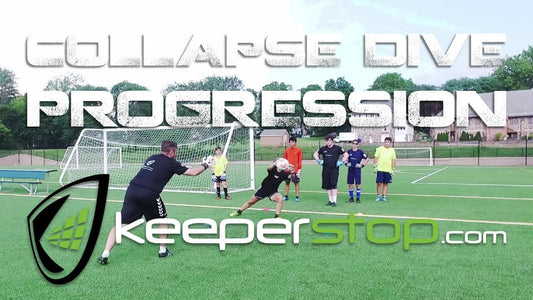
Goalkeeper Training: Collapse Diving Progression
Introduction: Goalkeeper drills for developing youth goalies from 11 to 16 years old. There are a million diving excercises. They are fun and exciting to watch. I wanted to introduce the when, why, and how of the collapse diving or better yet the decision to dive.
Question: Why dive? Answer: To make the save duh? More specifically because the speed and location of the shot moves the ball away from the goalkeeper’s center or core. Depending on the shot the collapse dive is an attempt to get as much of the keeper’s body behind the ball. It is more of a controlled dive as opposed to a full extension save.
The Keeperstop.com YOUTUBE goalkeeper training collapse dive progression from warm up to a few simple but effective progressions to reinforce the diving technique; a proper ready position; footwork; angles. Feel free to like it and share it with your goalkeeper friends.
Part 1 Cognitive Warm Up - Different color cones in the shape of a square or rectangle. Base the size of square on the desired footwork and the ability level of the goalkeeper. Goalkeepers can travel to line or touch a cone. Move from hand services to quick volleys as the keeper warms up, feels comfortable, wants to be challenged more etc. Vary the type of service to reinforce and challenge the goalkeeper’s ability to make the correct decision and control their body.Goalkeeper Coaching Points (CP):
Short sharp movements from the keeper close to their set position with arms bent and hands out in front at the ready.
Strong catch in front of the body.
Collapse dive when GK needs to get more behind the ball, control the ball, as well as the body.
Step is the elevator that gets the head and hands behind the ball. For higher shots the body and head are higher behind the ball. For a lower shot the goalkeeper transitions body weight and hands over the inside knee lowering the head and hands behind the ball.
I have the goalkeeper use the ground to absorb and control the impact of the dive.
Don’t cheat, get caught moving, or guessing.
Relax
Part 2 6:42 - Keepers in goal with 2 two different services. Here we opted to reinforce the collapse dive technique within angles such as 3 goal situation. Bigger space to move across and cover. Goal is split in half for to challenge the goalkeeper but reinforce the collapse dive technique and decisions through some success. Requires faster movement, recovery, better angles, control of the body and ball, and decisions to catch vs deflect. CPs:
Proper angles and starting position related to shooter.
Step and body position behind the ball is based on the shot. Goal is to finish with head and hands forward of starting position.
Get square and balanced to new angle and potential shooter as quickly as possible.
Part 3 8:49 – Evolve to a more game realistic shot from a side angle. Server can choose to shoot or pass to the center. Servers make sure this does not turn into a breakaway sessions. Goalkeeper has to consider many things such as angles, footwork, catch vs deflect as well as the techniques in diving.CPs:
Angle and vertical position have to consider a shot as well as a pass.
Balanced and ready
Quick movements and decisions
Manage rebounds out the side of the six yard box.
Always love what you do.
Details Matter
Give it your best every opportunity
To reinforce technique or decision making build from simple to complex. Controlled services and scenarios to game realistic.
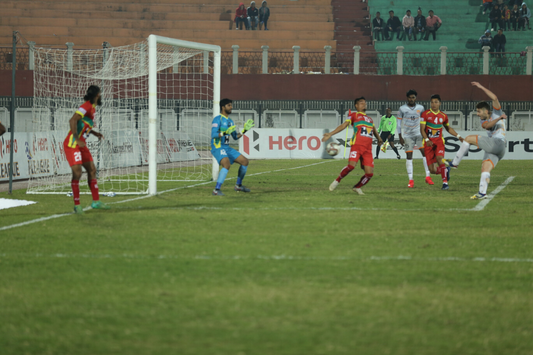
Coaching the Goalkeeper to Make Point Blank Saves
Great soccer goalkeeper training session by Tony DiCicco, Former Womens National Team Head Coach, NSCAA Goalkeeping Academy is the Founder and Technical Director of SoccerPlus Goalkeeper School. Session topic is Coaching the Goalkeeper to Make Point Blank Saves. Session address ready position and saving shape; angles; time and courage; diving, and second saves. Really fun and challenging goalkeeper drills for soccer goalies to develop courage and make quick decisions under pressure.
Credit:
Tony DiCicco, in addition to being the Director of the NSCAA Goalkeeping Academy is the Founder and Technical Director of SoccerPlus Goalkeeper School.
For information go to www.goalkeeper.com or call 1-800-keeper-1
Join Tony at the 2016 Soccer Champions Coaches' Clinic, March 3 - 5, at the Mohegan Sun in Connecticut. The www.SoccerChampionsClinic.com will have world-class clinicians, topics for coaches of all levels, a range of license opportunities, and a terrific mix of soccer exhibitors - all at the spectacular Mohegan Sun in Connecticut. While attending, coaches can earn their U.S. Soccer Federation E License; the NSCAA Small-Sided Games (4 v 4, 7 v 7 & 9 v 9) Diploma (NEW THIS YEAR and particularly timely considering the recent U.S. Soccer Player Development changes); or, the NSCAA Goalkeeper Level 1 Diploma.
TO REGISTER, visit www.SoccerChampionsClinic.com. Or, even better - bring your entire team or club coaching staff along and take advantage of special group pricing.
Muscle Memory - The Key to Reaction Saves
I get asked all the time about putting goalkeepers through reaction save situations. This is obviously a very key part of goalkeeping but there are a lot of things that go into being successful at it. Almost anyone can “stop shots” as the basics of it is pretty simple and easy. However, a true goalkeeper is very efficient and clean technically. So when they are forced to react and make a save, they will do it smoothly and either hold the ball or deflect it out of play/immediate danger.Click to read: “Muscle-Memory” - The Key to Reaction Saves!
By Todd Hoffard
National Director - ONE on ONE Soccer
Former MLS Goalkeeper Coach - New York Red Bulls
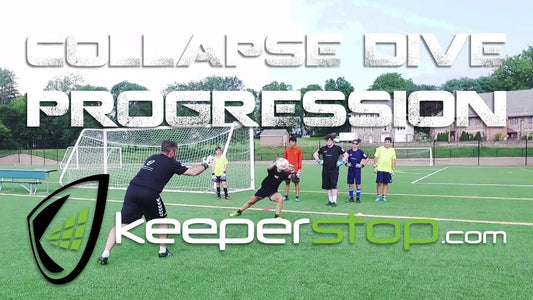
Soccer Goalie Diving Drills
When a soccer goalie dives to save a shot it is the goalkeepers best effort to get as much as possible behind the ball. Here are a few simple goalkeeper drills to work on the feet getting the hands to the ball, controlling the body and ball, using the the ground to cushion the dive, and more. The idea behind this session is to help improve the soccer goalies ability to safely and securely save the ball and protect themselves during and after the dive. This is achieved by effective interaction between coach and player, making sure that they follow the guidelines of controlling their body and the ball. The soccer goalkeepers participating in the diving drills are 11 - 13 years old. Please contact www.keeperstop.com with questions on soccer goalie drills, goalkeeper equipment, or goalkeeper glove sizing.
CLICK HERE TO WATCH THE YOUTUBE VIDEO OF THE SESSION!
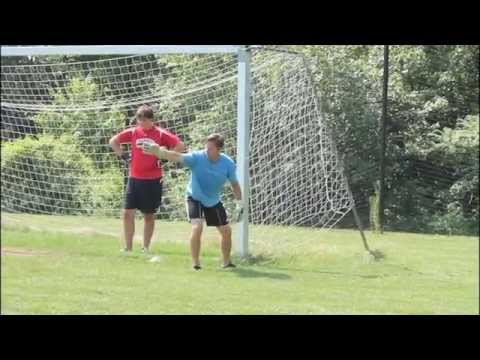
Goalkeeper diving technique, ready position, and 3 goal situation.
Goalkeeper diving training with the 3 shooters. Front post along the side line, middle, and second post. Goalkeeper diving session using the 3 Goal enviroment to illustrate how the goalkeeper is attacking the ball and the finished position. Diving and Angle session was conducted with high school aged goalkeepers. Maximizing a goalkeepers range and angle starts with proper diving technique.
CLICK HERE FOR THE VIDEO
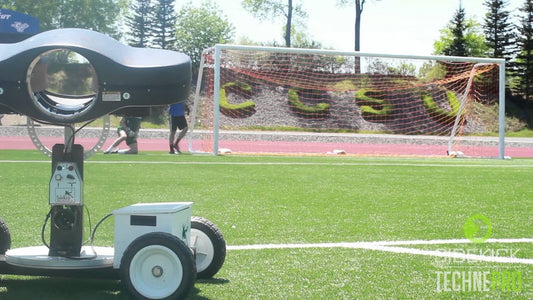
Goalkeeper Drills with the SideKick Ball Machine
Goalkeeper training with the SideKick. Goalkeeper handling, angles, and diving drills. Seattle Sports Science's SideKick machine was used to deliver consistent fast paced and accurate service for the goalkeeper to develop timing with getting ready prior to the shot, reducing angles slightly, and diving. The Sidekick is used by Champions League clubs such as Bayern Munich, US Mens National Team, and many MLS Clubs Goalkeeper Drills with the SideKick Ball Machine
Phase 1 is a goalkeeper handling warm up with shots from varying angles.
Phase 2 really utilizes the rope in order to highlight whether the goalkeeper is diving forward or back.
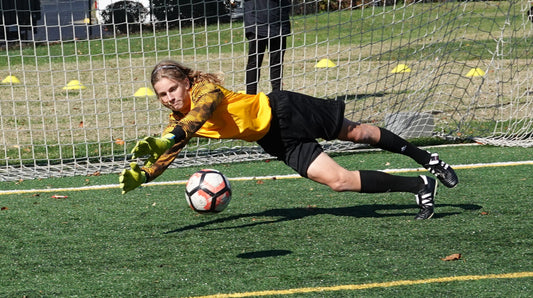
Advanced Catching and Diving
During a season, there will be moments within a match when the goalkeeper will be called upon to make the special save. The save will be recorded on the score sheet like any other shot attempt. But to the seasoned professionals, the importance of this save could be the difference between winning and losing, as well as promotion and relegation. The spectacular save not only changes the complexity of the match, but it re-energizes a team and awakens their fighting spirit. Spectators may view this save as “unexpected,” but to the goalkeeper who puts countless hours of training into a week this save is the result of hard work and commitment to their craft.
Through our numerous years of training goalkeepers at SoccerPlus Goalkeeper School, we have come to believe that a goalkeeper’s ability to dive is truly special. Every aspiring goalkeeper who attends the camp has the intention of making that extraordinary diving save, but not every goalkeeper has the athletic ability to fully propel themselves through the air and catch the ball. In addressing this topic of “Advanced Catching and Diving,” the following three saves will be covered: 1. Extension Diving, 2. Parrying, and 3. Tipping Back to the Bar. Furthermore, the article will identify the physical, technical, tactical and psychological implications needed to make these types of saves.
The Diving Saves
Extension Diving: There are two types of diving saves. The more elementary version identified in article 1 is called the Collapse Dive. A collapse dive is when the keeper catches the ball before diving. The other type of dive and the type we are identifying and training is Extension Diving or diving first and catching while flying towards the ball.
This is an explosive save used to cope with shots struck initially outside the reach of the goalkeeper. Using quick footwork, the goalkeeper propels the body through the air and catches the ball in mid-flight. Unlike the collapse dive, the feet are airborne.
Parrying: Deriving from the extension dive; the goalkeeper utilizes one or two hands to redirect the flight of the ball outside the goal. Balls that cannot be caught can be redirected using the fingertips or the heel-of-the-hand.
Tipping Back to the Bar: While using proper footwork to get back to the goal line and having precise timing, the goalkeeper extends up into the air to redirect the ball over the top of the crossbar.
The Four Pillars
Like other players, to examine the goalkeeper’s capabilities to make the dynamic diving save, I will use the “Four Pillars”, which are commonly known as the physical, technical, tactical, and psychological components of the game. Assessment and evaluation of the goalkeeper using the four pillars allows coaches to pinpoint areas of concern, as well as track the amount of progress made in their development. Obviously, higher level goalkeepers possess extraordinary abilities in reference to the four components. In preparation to making these types of saves, goalkeepers must consider the following implications:
Physical
Height – will determine starting position. Smaller goalkeepers will stand closer to the goal line; taller will stand further off the goal line.
Power (explosiveness) – 1) main attribute used to dive for balls struck outside the comfort zone, 2) vertical jump.
Strength – assists with propelling body off the ground, as well as absorbing contact with ground.
Agility – the goalkeeper’s ability to change direction (up/down, side to side, forward/backward).
Foot Speed – main ingredient used to make these saves; sprint, shuffle, cross-over step, and drop-step.
Reaction Speed – quick reflexes.
Flexibility – being limber.
Technical
Extension Dive – take forward step with the foot closest to the ball. Place weight on that leg as you bend. Using your arms and opposite leg, transfer momentum and drive your body towards the ball. Upon catching the ball, continue to drive through the ball while descending towards the ground. The ball should be the first thing to hit the ground, being used to absorb impact while also using the ground to help secure the catch.
Parrying – progression is the same as the extension dive. Being fully extended in the air, the goalkeeper can use two different surfaces of hand to redirect uncatchable shots. 1) Fingertip: used for shots hit soft enough to be redirected around or over the goal. 2) Heel-of-the Hand: used for shots hit too hard to be caught or redirected with the fingers. The heel is the part of the hand at the bottom of the palm, just above the wrist. Use of the heel of the hand will allow the goalkeeper to deflect hard shots with force far away from danger. Avoid trying to slap or stop the ball; make the decision to catch or parry.
Tipping (Back to the Bar) – goalkeeper starts in a sprinter stance. They immediately drop-step and move into a crossover step after reading the flight of the ball towards the goal. At the last moment, they leap off the back foot and drive the closest hand up to the ball. Contact with the ball is made with strong fingertips, using a subtle jab through the center of the ball.
Tactical
Assess the distance and position of the ball to determine vertical and lateral positioning.
Assess whether there is pressure on the ball and which foot the ball is being struck with on goal.
Recognize that if the ball is bouncing, the goalkeeper’s position should be closer to the goal line.
Recognize the approach of the shooter. Usually, a strong/faster approach towards the ball indicates a shot with power; if the shooter slows down, it represents a possible chip.
Weather Conditions – should influence the goalkeeper’s decision to catch, box or parry.
Anticipation – the goalkeeper who reads the game well and anticipates the next touch (pass, dribble or shot) generally arrives in the proper position to make the play sooner.
Psychological
Confidence – goalkeepers must believe that they can make the spectacular save.
Concentration – maintaining focus throughout the match; including stoppage time/overtime. Knowing that at any given moment, they may be called upon to make the special save.
Composure – be relaxed under pressure; embrace the moment.
Courage – this is the biggest hurdle for youth goalkeepers. When learning and training these types of saves, most fear hurting themselves. Also, many youth goalkeepers favor diving to one particular side; they need to address these “mental blocks.”
Training Ethics/Motivation – success is equated with preparation. To achieve and maintain a high level of goalkeeping, you commit yourself to training. Incredible saves should only surprise those who are unprepared to make them.
Without question, saves of this magnitude reverberate for years. To this day, people refer to Gordan Banks’ save on Pele’ during the 1970 World Cup as the greatest save ever made. In the women’s game, the diving save by Brianna Scurry on a penalty kick during the 1996 Olympic Finals set the stage for Brandi Chastain’s winning goal. On the biggest stages, such as the World Cup and Olympic Games, world class goalkeepers will emerge with world class saves. It is this intangible quality that separates them from other players.
George Kostelis is the owner and director of GK Soccer Training and the National Director of the SoccerPlus Goalkeeper School.